|
The Colorado Railroad Museum, 2011 |
|||||
|
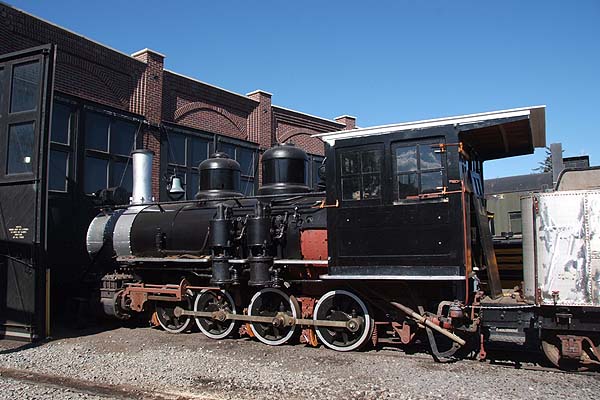
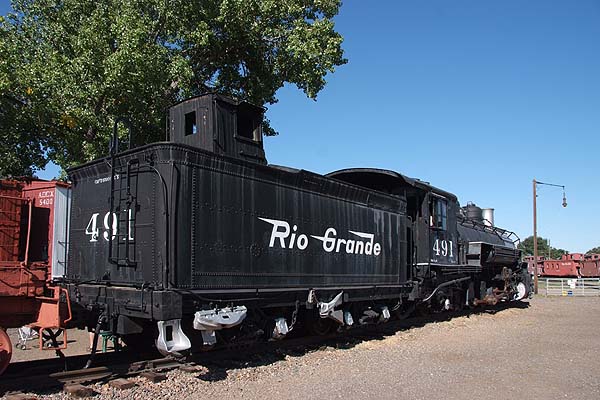
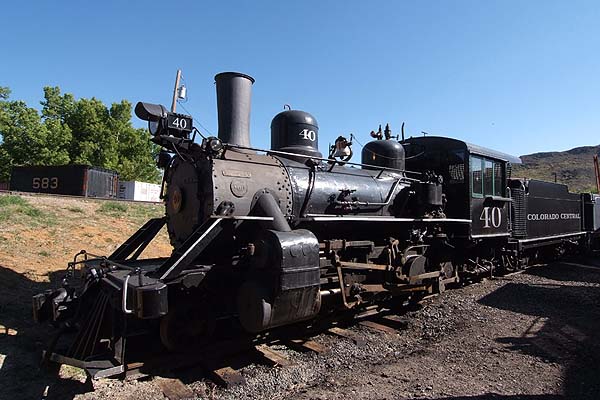
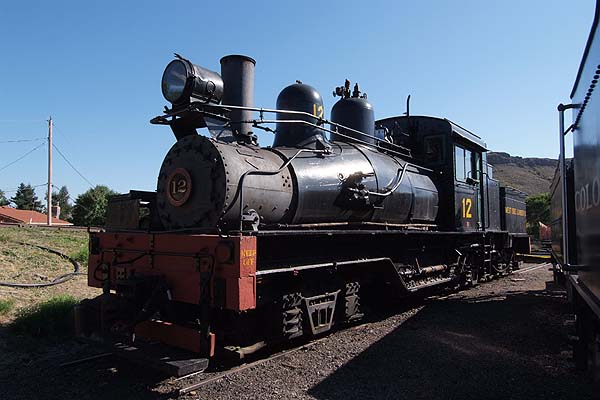
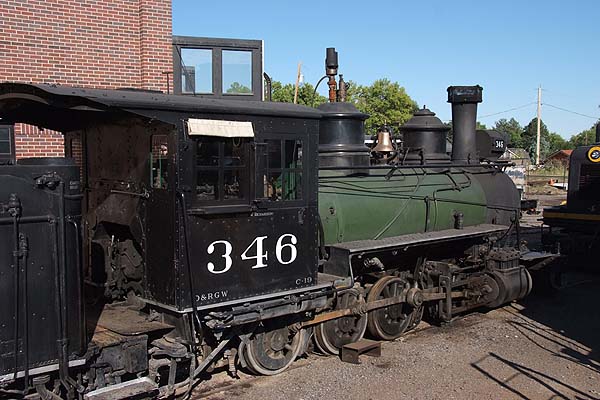
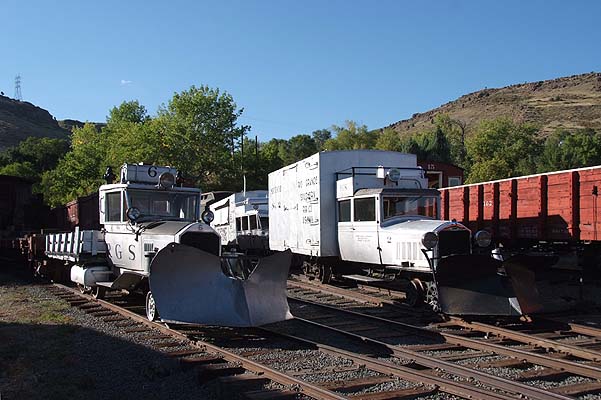
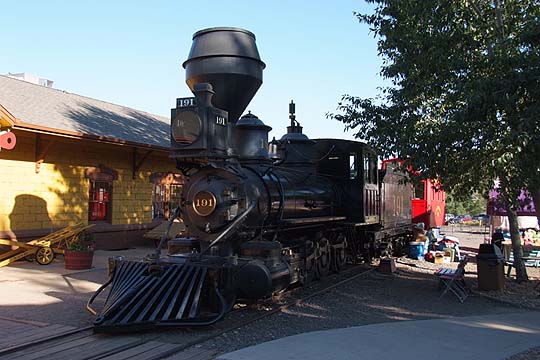
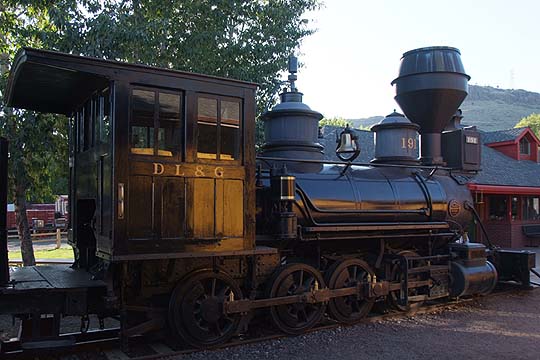
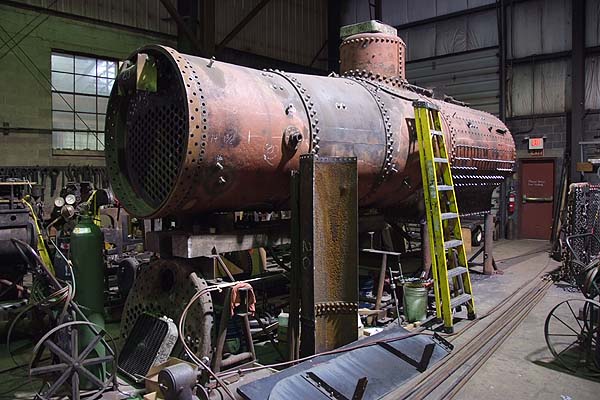
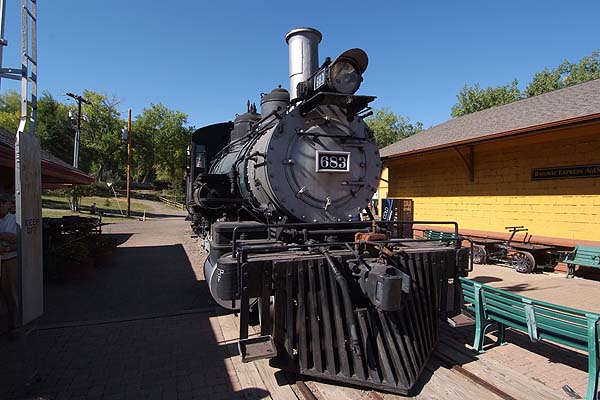
James Waite reports from a visit in September 2011. The museum's website is www.coloradorailroadmuseum.org. This extensive collection at Golden, in the Clear Creek valley around 20 miles west of Denver, owes its existence to Bob Richardson and Cornelius Hauck. Bob came from Pennsylvania and fell in love with the Colorado narrow gauge after making his first visit in 1941. After war service overseas he and a friend made the decision to move to the state and set up the Narrow Gauge Motel in Alamosa which soon became a home from home for visiting enthusiasts – encouraged by the journal Narrow Gauge News which Bob wrote and published from time to time in the 1940’s and 1950’s. In 1950 Bob purchased DRGW 2-8-0 no 346 (Baldwin 5712/1881) and put it on display at the motel. Soon after it was joined by two other locos. One was sister DRGW 2-8-0 no 318 (Baldwin 14769/1896) which had started out life as Florence & Cripple Creek no 8 and which had been purchased from the DRGW by Cornelius, an enthusiast from Ohio. The other was a 4-6-0, another loco built new for the Florence & Cripple Creek as their no 20. It moved on to the Rio Grande Southern RR where it retained its number and ran until the line closed in 1951. It was rescued by the Rocky Mountain Railroad Club and sent to the motel for safe keeping. The motel business closed later in the 1950’s. Bob and Cornelius bought a plot of farmland on the eastern outskirts of Golden and opened the museum on the site in 1959, initially to house the locos from the motel. Over the years its collection expanded dramatically and came to fill what must have initially appeared to be a vast site. Bob continued to devote his energies to the museum until he retired in 1991 at the age of 75 and returned to join family members in Pennsylvania. He died in 2007. It’s fair to say that the work he did in bringing the Colorado narrow gauge to the attention of a wide audience must have been one of the biggest single factors which led ultimately to the preservation of the Silverton and Cumbres lines as well as many of its locos and stock elsewhere. The main museum building is a replica 1880’s station. It houses an extensive and fascinating small exhibits collection and also what must be one of the best-stocked narrow gauge bookshops anywhere in the world. There’s a separate library building and a replica roundhouse and repair shop. The collection of large exhibits, both standard and narrow gauge, in enormous. For most people the star attraction will be the seven 3ft gauge steam locos which now live here along with five standard gauge ones, most of them with at least some historical association with the state. Other important exhibits include three Galloping Geese from the Rio Grande Southern, improbable-looking railcars which were more or less home made, a business car from the same line and several DRGW carriages, vans and cabooses. The oldest loco exhibit is 3ft gauge 2-8-0 no 51 from the Denver, South Park & Pacific RR (Baldwin 4919/1880) which was later renumbered 191 and later still became Colorado & Southern RR no 31. It later moved to a logging concern and had spend 30 years or so in increasingly poor condition at a museum in Wisconsin before arriving at Golden in about 1973. It’s now been magnificently restored to something like its original condition, albeit as a static-only exhibit as it would need a new boiler designed to comply with the stringent FRA constructional methods before it could ever run again. In addition to no’s 318 and 346 another long-term narrow gauge resident is DRGW 2-8-2 no 491 (Baldwin20829/1908), one of the K37 class locos rebuilt from standard gauge 2-8-0’s by the DRGW at their Burnham shops in the 1920’s. It was withdrawn from service by the DRGW in 1970 after the closure of the Alamosa-Durango-Farmington line and has been at Golden since 1985. Three more narrow gauge locos came from the Georgetown Loop RR at Silver Plume, 40 miles or so further west up the Clear Creek valley after the organisation which had run the line for many years was evicted by the state authorities in 2004 and replaced by a competing operator. All three have been in working order in recent years. Two of them are three-truck Shays which came from the West Side Lumber Co’s railway in California, no’s 12 (Lima 3302/1927) and 14 (Lima 2835/1910). No 12 started out life as no 6 of the Swayne Lumber Company’s railway at Oroville, California which closed in 1938. No 14 was built for the Sierra Nevada Wood and Lumber Company’s system which straddled the border of California and Nevada near Reno. The West Side line had become the last surviving 3ft gauge logging railway in the west of the US when it closed in 1961. Sadly efforts to preserve it were unsuccessful though some of the track remained in situ as late as the early 2000’s and may still be there. The nine locos it possessed at the time of the closure (two Heislers and seven Shays) have all survived. The third ex-Georgetown Loop loco is a 2-8-0 (Baldwin 53777/1920) which spent its working life on the International Railways of Central America, latterly as their no 40. It was withdrawn from service in the 1970’s in El Salvador. It was bought for preservation by two US enthusiasts while standing at San Salvador depot and worked under its own steam northwards through Guatemala as far as the Mexican border before being transferred to a standard gauge wagon for the journey on to Colorado. It ran on the Georgetown Loop for many years, interrupted by a two-year holiday on the White Pass and Yukon in 2000 and 2001. Surrounding the Golden site there’s a circuit of 3ft gauge track, perhaps half a mile long altogether. No 346 was restored to working order recently and is steamed on a few days each year. More frequently one of the Galloping Geese runs on the circuit. Details of operating dates are on the museum’s site at www.coloradorailroadmuseum.org. I visited while changing planes at Denver on my way home from Durango. It was perhaps not the best occasion to choose as it coincided with a Thomas the Tank engine weekend. T the T is phenomenally popular in the USA and the site, while extensive by the standards of many railway museums, was just heaving with families. The museum had the use for the weekend of the enormous parking lot at the Coors brewery nearby but even this was full. Photography was well-nigh impossible with all these people around but the museum’s volunteers kindly let me stay on after the site had closed to the public and I was able to take most of my photos then. RGS no 20 was sent to the Strasburg RR in Pennsylvania several years ago for restoration to full working order. I called in there in October 2011 on my way home from the East Broad Top RR and was shown round the well-equipped workshops. No 20 was one of the two locos being overhauled. My guide showed me how the middle ring of the boiler had been severely dented after a derailment, not an uncommon event on the lightly laid RGS tracks. It’s said that after the derailment the RGS management always arranged for the loco to be parked in a dark corner whenever the insurance inspector was due! Needless to say the boiler, which was otherwise in quite good condition, now has a new lower middle ring welded in. There’s a lot of restoration work still to do and the museum is appealing for funds to complete the job. The museum’s always been run on a not-for-profit basis. I couldn’t find any way of getting there by public transport. It took me about half an hour to drive there along the motorway from Denver airport on a Sunday afternoon. It’s undoubtedly one of the finest museums anywhere, especially for its collection of narrow gauge locos and stock and for its small exhibits. The Silverton and Cumbres lines are, of course, the big attractions in Colorado but if you’re passing through Denver to visit them try to find time to call in at the museum while you’re there. The first selection is of narrow gauge exhibits:
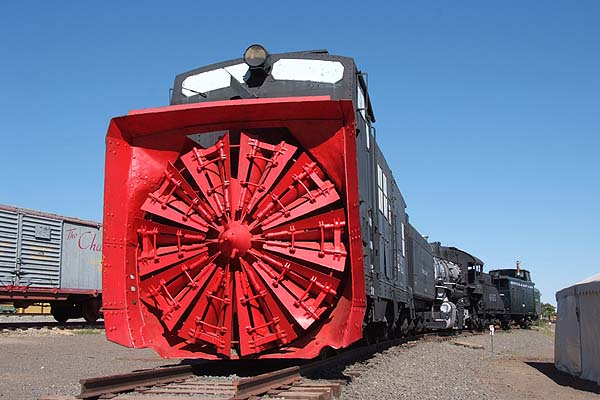
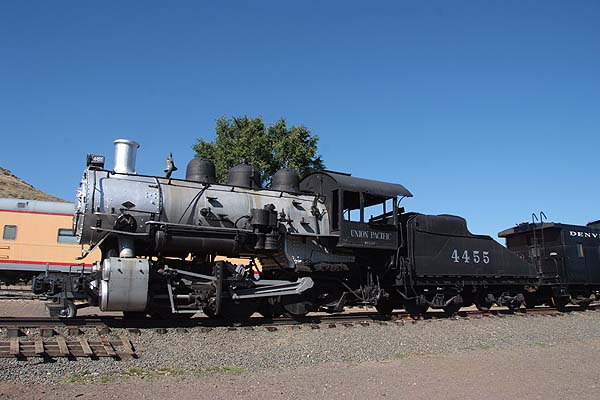
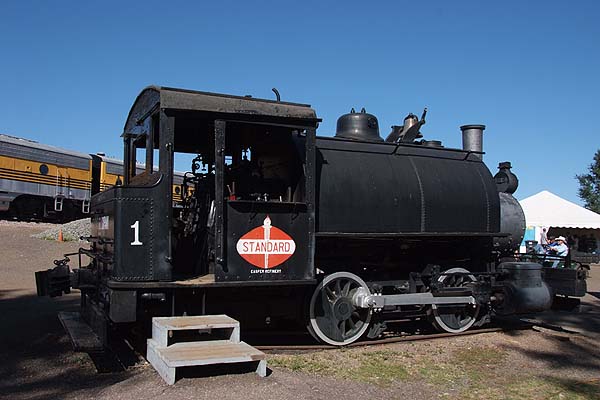
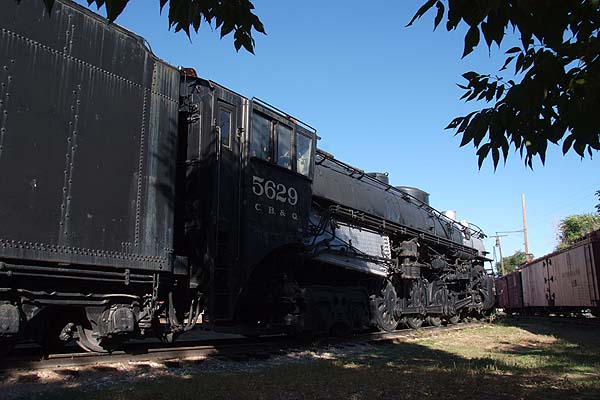
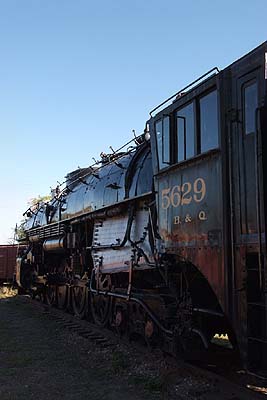
These are of the standard gauge exhibits:
|
|