|
Temple Side Trip, 2010 |
|||||||||||||||||||||||||||||||||
|
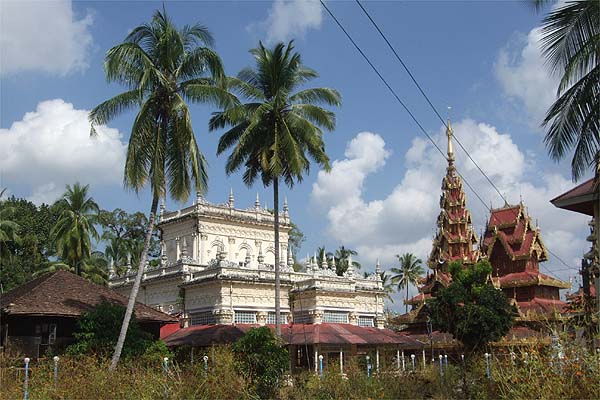
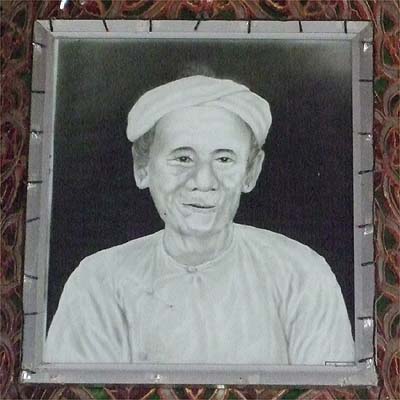
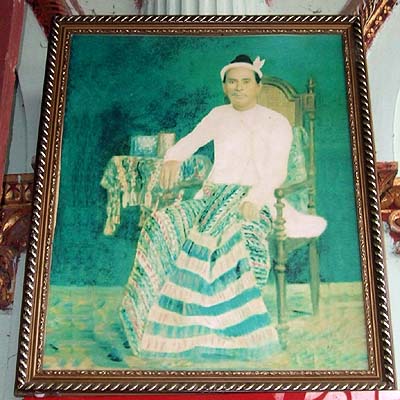
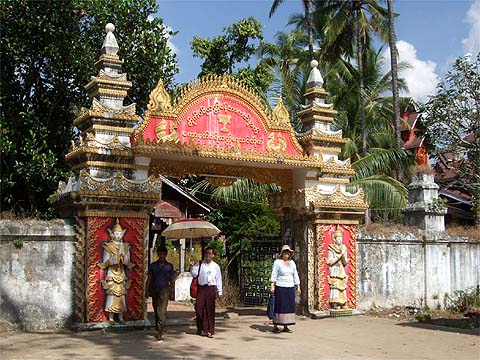
This is the ninth part of our 2010 Burma Crusade. Click here for the index. Our travelling companion, Han Win Aung, has only two known faults. One is an obsession with football and the other is that he never bothered to learn how to swim when he was young. We can't do much about the first one, but every year we try to arrange at least one trip in a small boat along as big a river as possible and after the Irrawaddy you can't do much better than the Thanlwin (Salween) as it enters the sea at Moulmein. We'd got him some 10km upstream in one piece and now it was time for all of us to broaden our education as even Han had never been here before. After a gentle stroll through the first village we came to the second and where the road turned right at the end, we went entered a slightly different world. The temple complex dates from the late-19th century (like many of our steam engines in the rice mills!) and is a delightful eclectic mixture of European and pan-Asian styles, it may not be a old as some, but it's in complete contrast to the run of the mill golden pagodas found all over the country for which even the most hardened temple basher must have to stifle a yawn after the first few days. It was constructed mainly by U Nar Auk (below right), a famous Mon businessman, together with a number of associates and relatives.
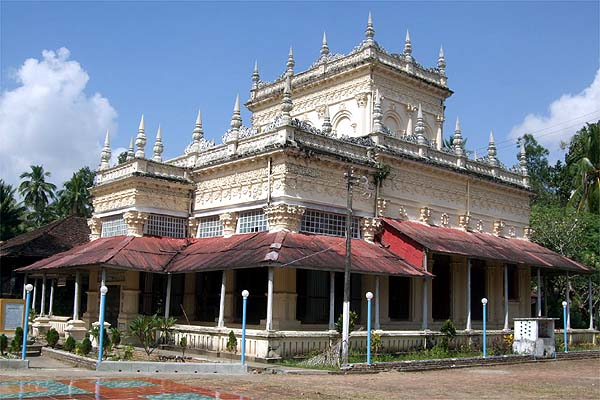
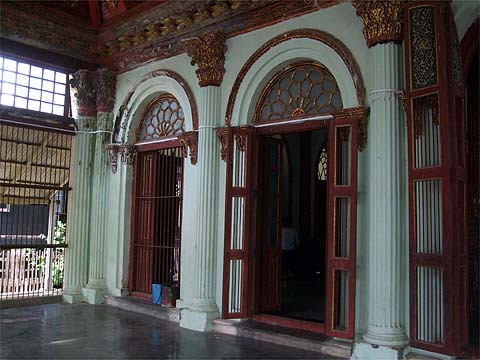
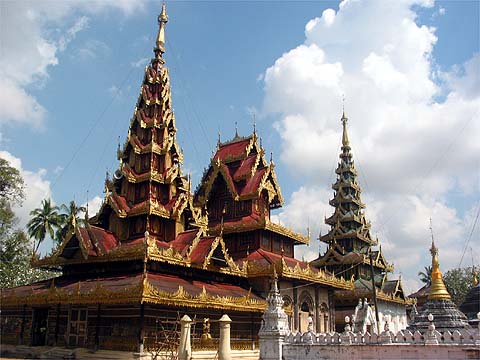
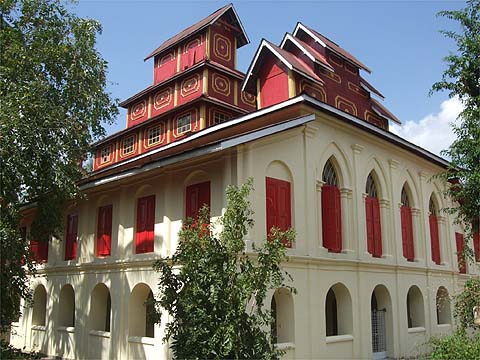
His sponsor (and fellow Mon) U Htaw Ung was a wealthy teak merchant, together they made the mistake of taking on the Irrawaddy Flotilla Company whose fares between Moulmein and Rangoon (Yangon) were outrageously high. He lost of course, the IFC's pockets were deeper than his and the free tickets both offered could not be sustained for ever (shades of 21st Century Air Asia here). Anyway, in the course of time, they decided their home villages needed a monastery with a special set of pagodas and they survive in use today, in fair to very good condition although near ground level there has been some water (possibly flood) damage. Perhaps the most unusual building is the nearest cream coloured one, which appears Indian inspired:
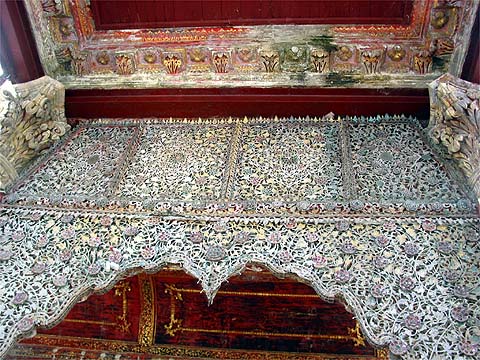
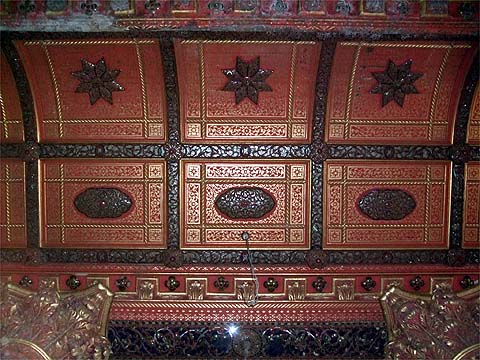
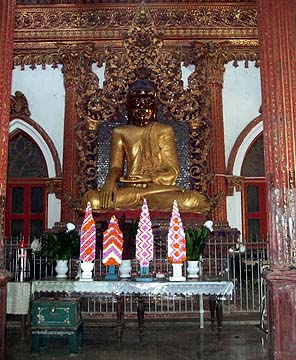
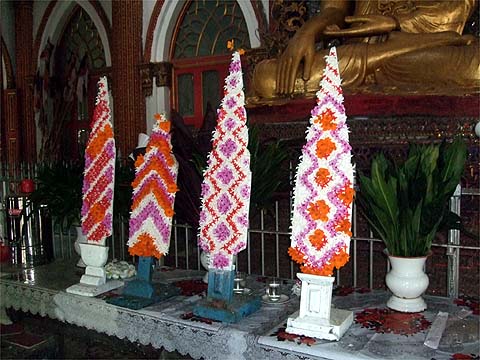
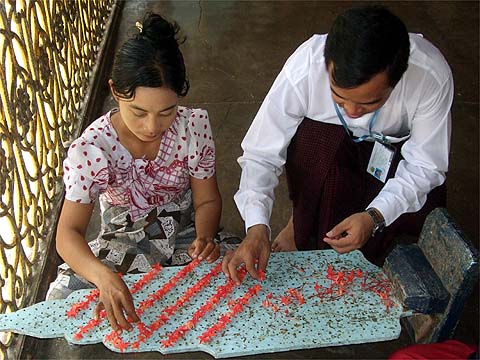
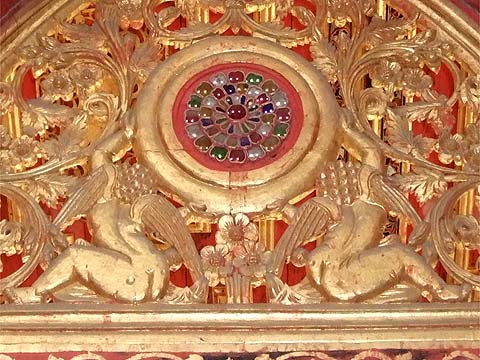
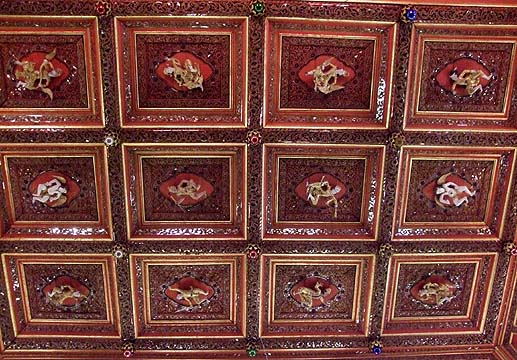
Inside, it is richly decorated, the ceilings are especially impressive and well preserved but the inevitable Buddha does not appear to be anything special. In front of it are boards filled with flowers, these are changed on a daily basis, elsewhere we found young girls at work on this and Han naturally gave assistance. We know he needs a better paid job than guiding, but I am not sure this is it.
Next to it are two shrines also housing Buddhas and fine decoration.
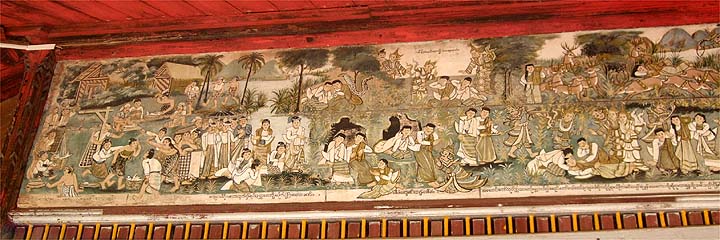
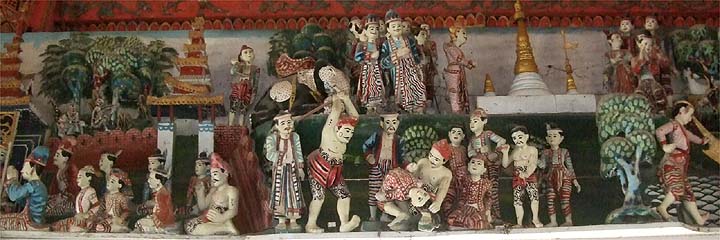
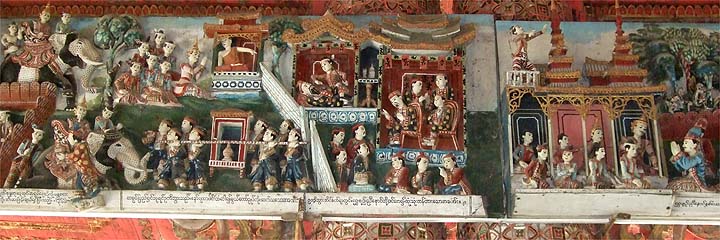
In the outer area of the first part of the red building there were what looked to me like conventional pictures of the Buddha's upbringing. Inside were far more lurid and graphic events in then recent 19th century history including a visiting Chinese delegation. Bear in mind that the Thanlwin rises in China and the Mon people themselves consider themselves to be migrants from the present Mongolia.
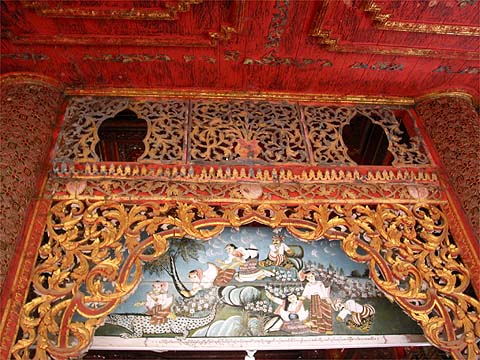
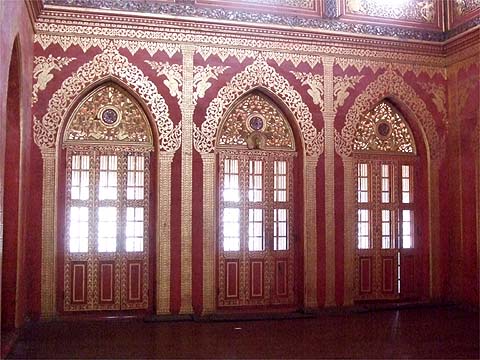
After all of which the Buddhas and exquisite doorway arches in the second part of the building seemed quite tame:
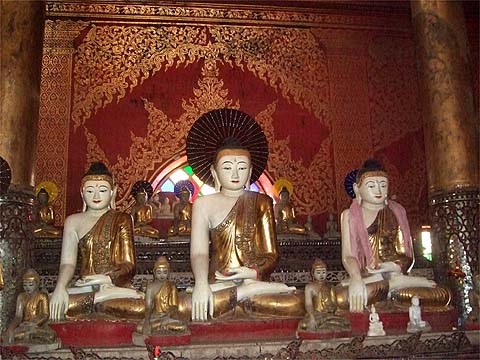
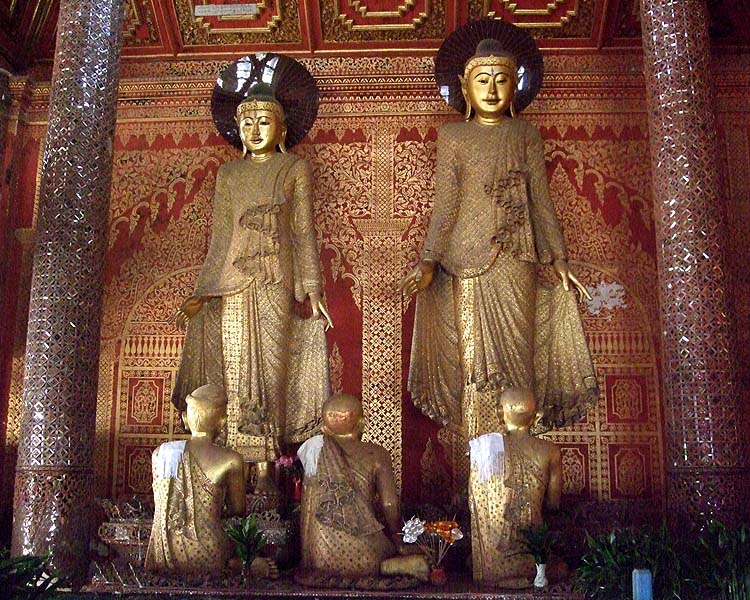
For me, in many ways, the highlight of the visit were the five Buddhas in the green building and I have used a much larger picture than usual to illustrate them. Quite simply they were carved from a single teak tree. The largest one must be nearly 4 metres high...
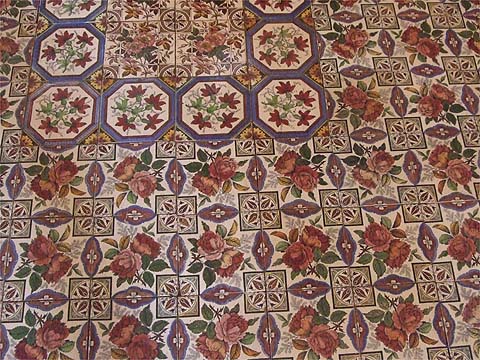
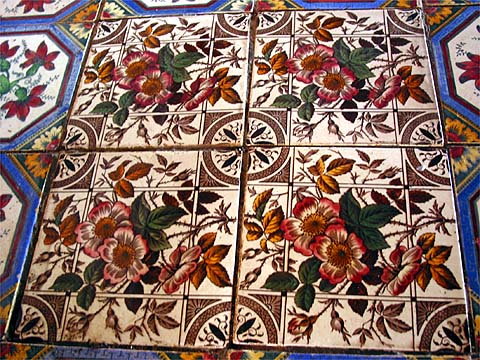
Considering his treatment at the hands of the British IFC, it seems a little strange that U Nar Auk chose to pave the floor with their tiles which were shipped from India. For the second picture I have used Photoshop's 'Auto Adjust Colour Balance' to remove the red cast caused by the reflection of the ceiling. Yuehong, naturally, loved them.
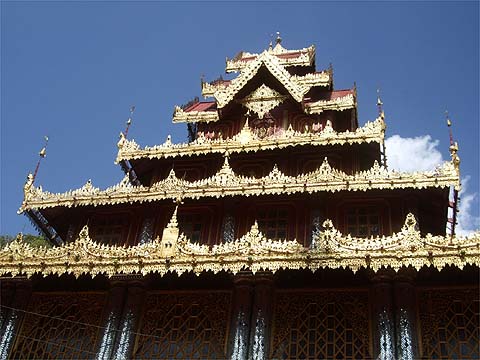
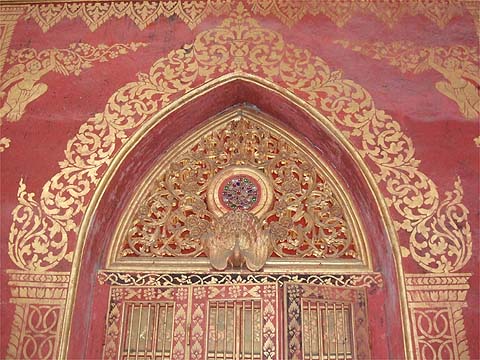
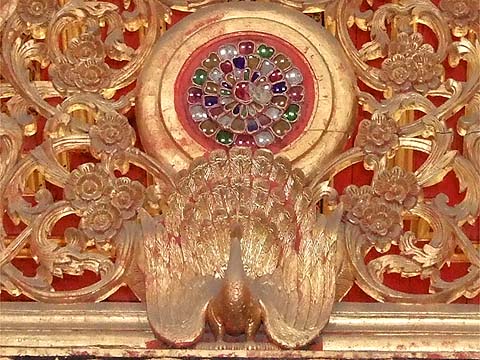
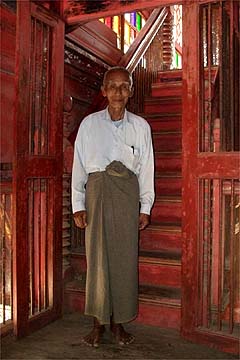
Behind these two buildings is the ordination hall, the first picture taken from the only clear side against the light does not do it justice, as the detailed picture shows, it gleamed in the sun. The main upper room features some further glorious decoration, note the peacocks above the middle doors and what look suspiciously like angels above the left and right doors... Finally we see our personal guide, he came to work here aged 18 and is still present 68 years later...
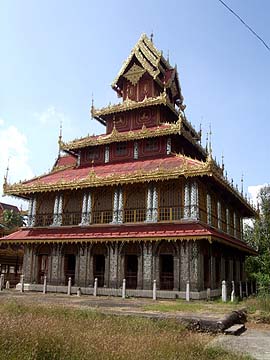
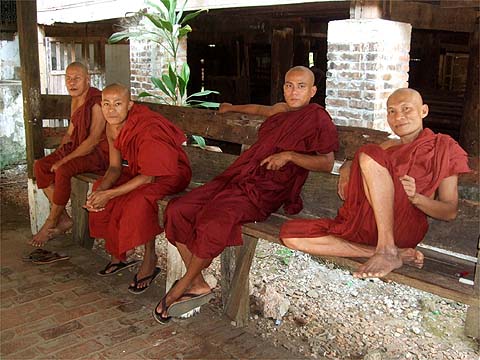
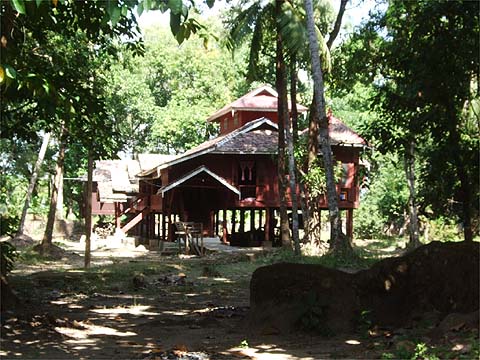
There are indeed monks resident here although they tended to keep a low profile. They are housed in traditional buildings and also are nearing completion of renovations, this imposing original 19th century building. There are also a number of other structures of lesser (and newer) note in the compound, we left very satisfied we had made the effort to get here.
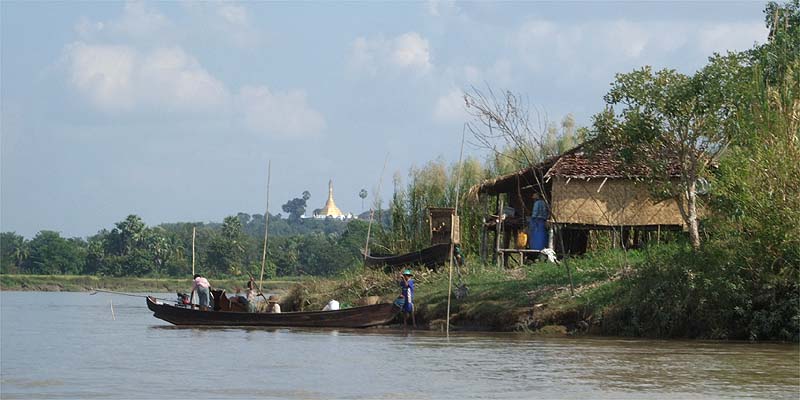
As we returned to the land of the standard golden pagoda, the tide had turned and nearly all the fisherman had tied up on the river bank.
It was a great trip, expect to pay Ky 20-25,000 for the boat until this place appears in 'a famous guide book' after which it will probably cost twice as much and you'll be chased through the village by kids begging for presents. Just ask in the Breeze Guest House in Moulmein and please keep too much detail off the forums which are gleaned by the guide book compilers. In the meantime, there is a little bit about it on the web, just type "U Nar Auk" into your favourite search engine. |