|
Irrawaddy Steamers 2010, Part 4 |
||||||||||||||||||||||||||||||||
|
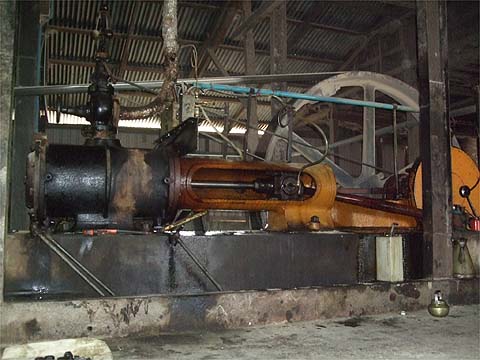
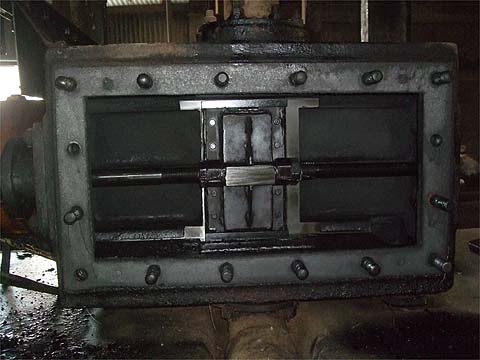
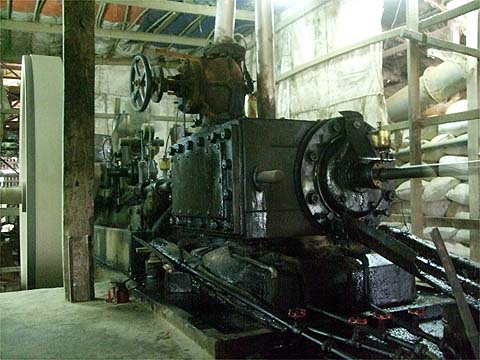
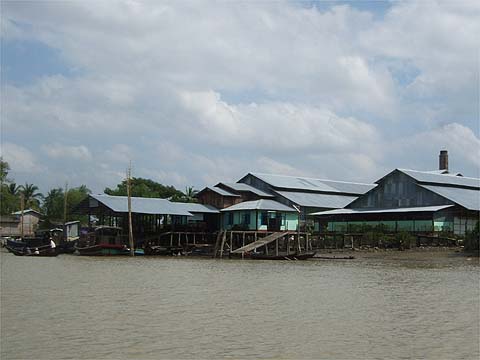
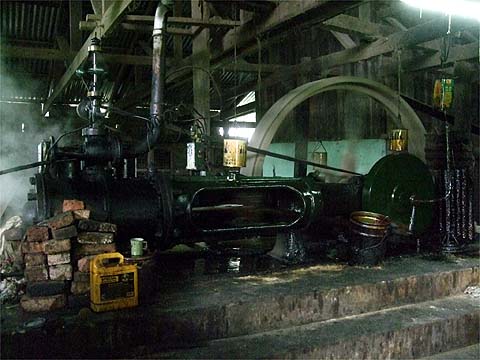
This is part of our 2010 Burma Crusade. Two towns in the Irrawaddy Delta were particularly mentioned in reports about the effect of cyclone Nargis in 2007. We had been to Bogalay in 2005 and therefore had some sort of feel for what we might find when we returned in 2009. However, Labutta was an 'unknown', we had baulked at the 46 mile journey from Myaungmya in 2005 as we had plenty else to fill the time available. Now was the time to make a visit as it was reported to have a small concentration of steam mills. 'About 3 hours' was the best estimate Han could get for the journey time each way and as we were very comfortable in Myaungmya, we elected to do it as a day trip. In fact the road has improved, it's nearly all dirt but at least half of it has been graded quite well and without doing anything stupid driver Mahtgyi cut the journey time to just 2½ hours. It was not very interesting, the land was slightly higher than the main delta area, it was covered mainly in woody scrub which had been cleared in places for people to eke out a meagre existence, there was just one substantial bridge over a small side arm of the main river half way. Labutta itself was rather larger than I had expected but not an attractive town. Needing to do something for the people post-Nargis typically the government had built a large number of brand new offices outside town. Nor surprisingly, the waterfront was bustling and, inevitably in Burma, filthy. There are four mills on the riverside, north of the town. The most northerly, some way out, was under repair, their engine a Marshall with the valve chest cover removed:
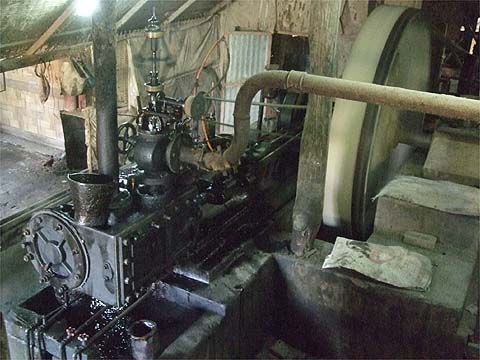
We went into town and found the next two mills working, Marshalls again... One (left below) was the standard K class (#74959), the other (right below) the less common earlier C class (and the mill still had its old MacDonald engine present).
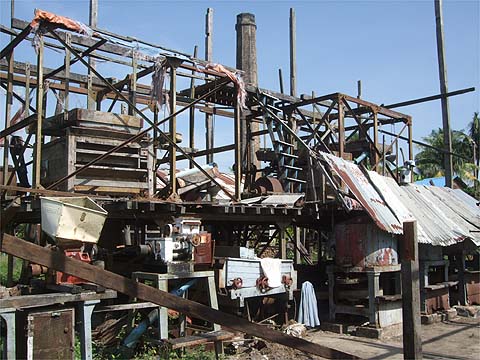
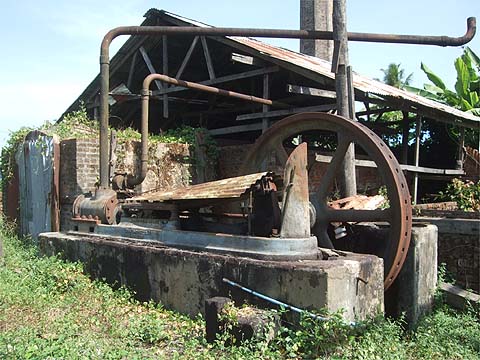
The last mill in the town had been 'Nargised'. The chimney was standing but the mill had lost its roof and been wrecked and there was obviously no money to repair it. The MacDonald engine (with George Garrett on the base) was rusting away in the open:
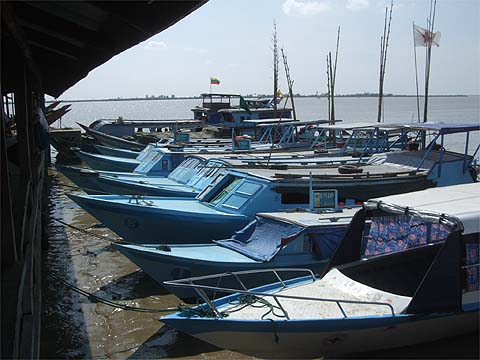
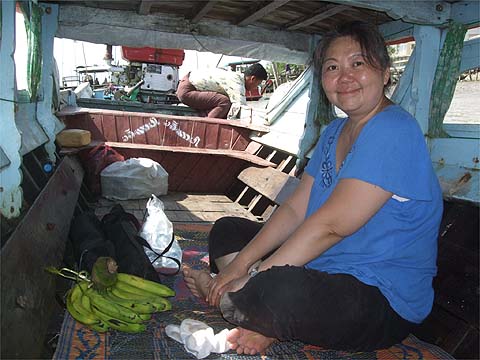
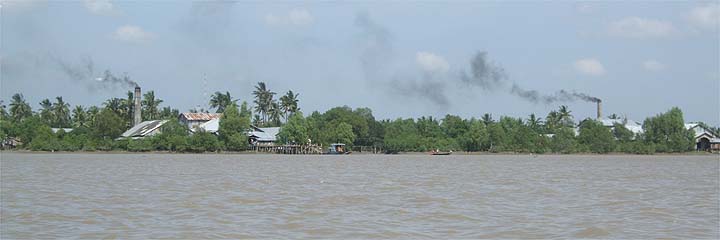
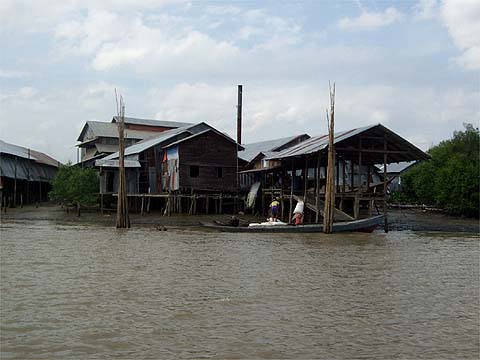
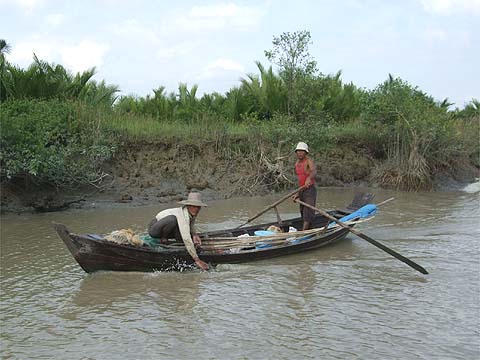
It was time for a boat trip across the wide expanse in front of us, but not with one of these, they belong to the UNDP although they don't seem to see much use at present. They were numbered sequentially 1 to 11 and only 4 was missing. We got on our charter and Yuehong prepared for our lunch. These bananas are intended to be eaten green and are delicious, but it was too much for Han who likes his yellow, soft and to our point of view, half way to being rotten. Anyway, the view back where we had just been was splendid.
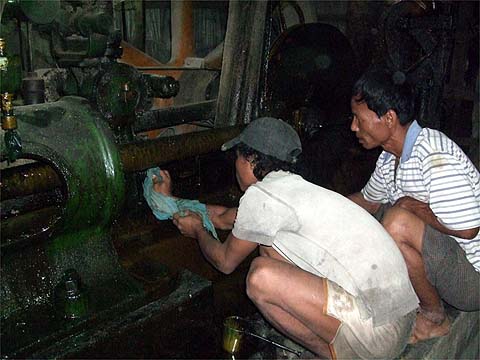
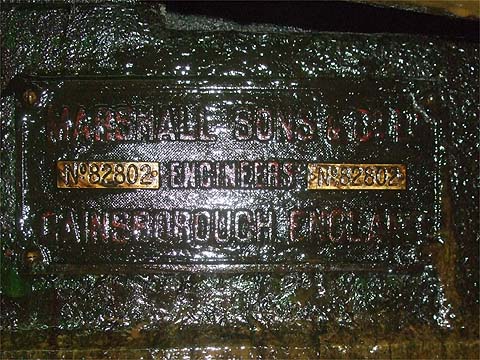
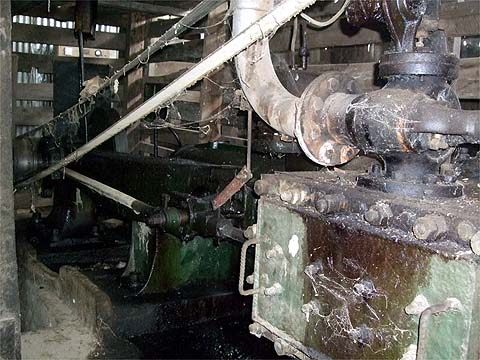
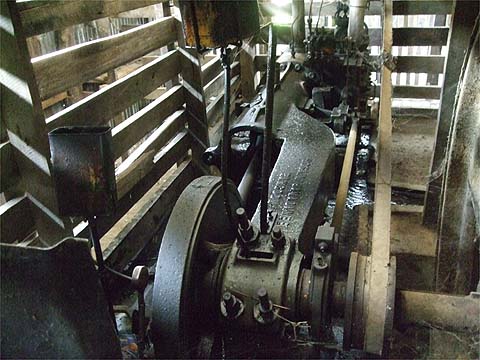
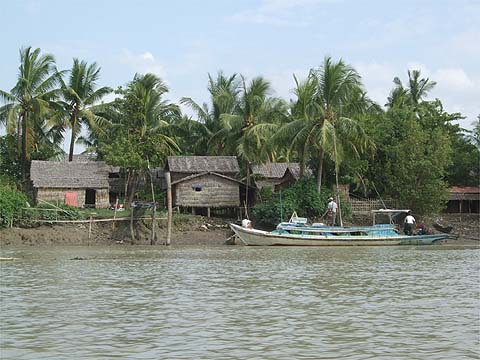
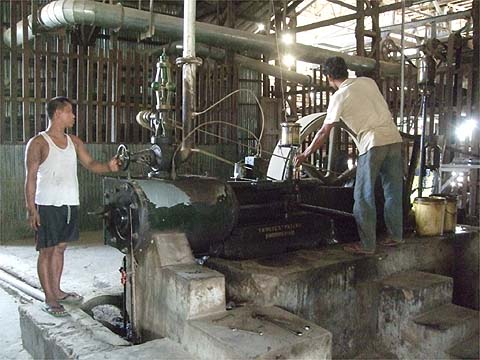
We missed the first mill as it was due to work later and headed for our boatmen's village, altogether about an hour from Labutta. This was in the heart of Nargis country and they told Han how two of their boats had been tied to a large structure, about 100 people packed inside and they survived the tidal surge. Many more tried to run away and perished - there is no high ground in the area at all. The first mill naturally had another Marshall, this one had a worksplate and the staff cleaned it for us - without stopping the engine, of course.
Across the water, a second working mill produced a 12" Tangye, but this one had no markings at all, not even the "+" on the valve chest cover, save its etched works number, #11747. It's of the Hosain Hamadanee generation:
The third mill here was the unlucky one. Judging from dates present it was newly rebuilt when Nargis struck, the mill had been abandoned for the time being and their Hosain Hamadanee engine was boarded up in a timber cage, getting the number (probably #10618) required reaching through it, first with the Swiss Army knife to clean it and then with the camera:
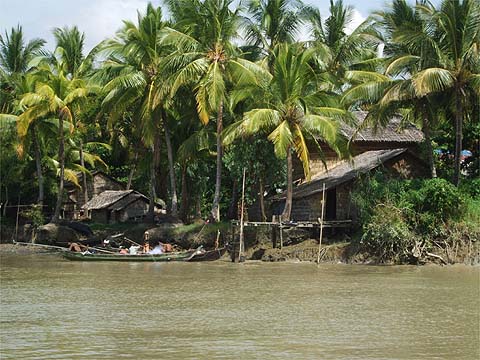
This is the village with our boat coming to pick me up from the closed mill above. The water was apparently some 4 metres high at one stage reaching the level of the bottom of the roofs. By and large there's little sign left to an outsider, just masses of clean water jars donated through UNICEF by AusAID.
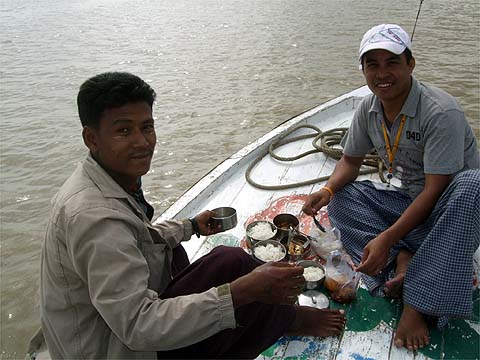
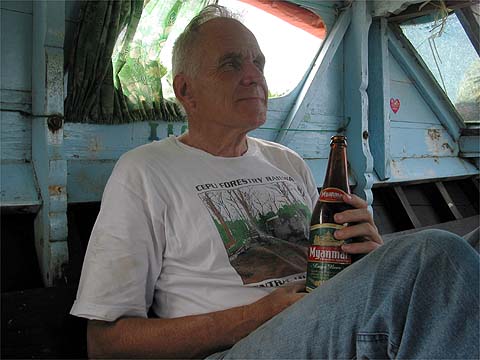
We'd left Mahtgyi time for lunch but Han was starving. It had to be a take away which he later shared. I enjoyed a different kind of take away while we sped down the river back to the last mill of the day:
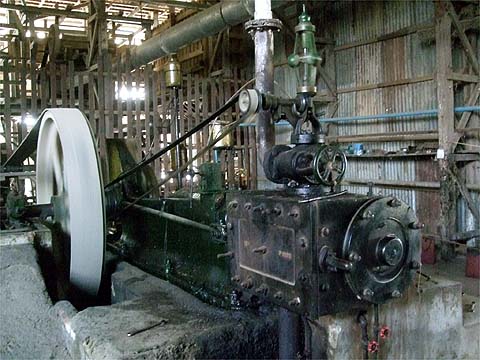
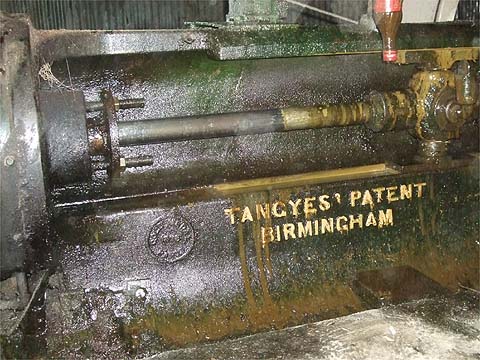
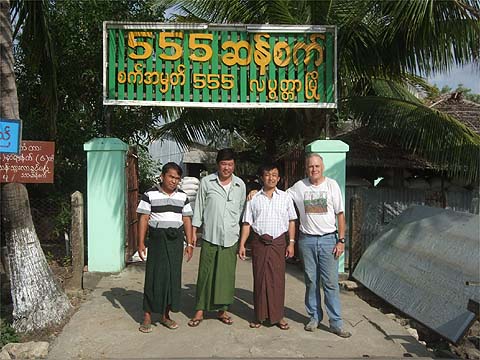
The last mill was a former government owned mill which had recently been privatised. They had a lovely 13" old Tangye with the Paris Gold medal. They weren't quite ready to mill, but they knew we had to get back to base and ran the engine for us. As we were packing up to leave, the owner asked if I would be putting the pictures on 'my website', I said yes I did have one and I would give its address to him. Sitting down in the office he smiled, "I know your site well. You've been as far as Myitkyina and down in Mon State you're making a DVD about Dakhondaing!". He even knew about the steam engines in Java's sugar mills. You could have knocked me down with the proverbial feather, he must have realised immediately who we were when we arrived! I guess he must have wondered why we had never paid a visit to his mill when we seemed to have been almost everywhere else. So now he must be satisfied, another example, if ever it was still needed, of the power of the internet.
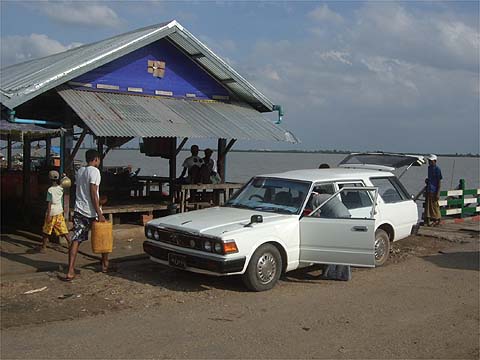
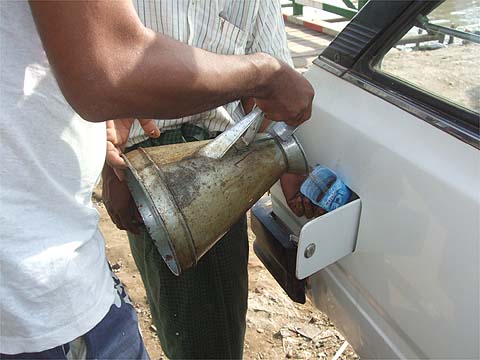
All we had to do now was get back to Myaungmya before dark, but first it was time to give the car a drink the old fashioned way - I butchered a drinking water bottle to act as funnel.
It was another great day out, organised off the cuff perfectly by Han. We're not making many great new discoveries but we are seeing new mills and new engines and we've got a little bit more time than usual to learn more about the people we meet along the way. Next day was to be the next best thing to a rest day - a morning in Myaungmya. |