Steam Age Relics on St. Thomas and St. Croix, US Virgin Islands, 2013
Thomas Kautzor has been to several Caribbean islands to check out what is left of their railways and industrial heritage.
For the full general index, see Railway Relics (and more) in the Caribbean,
James Waite writes about St. Thomas
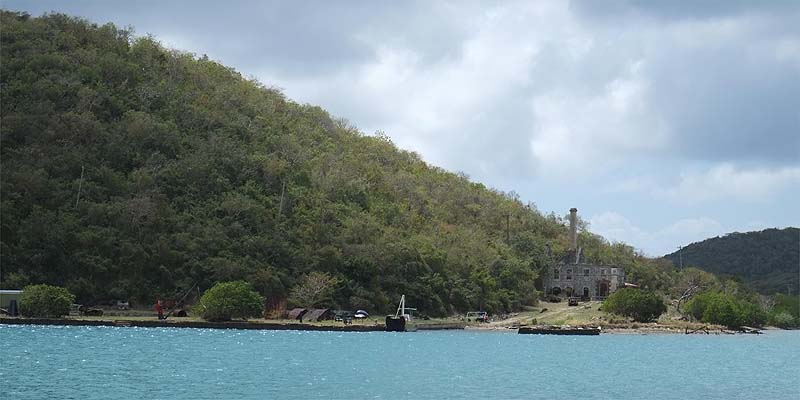
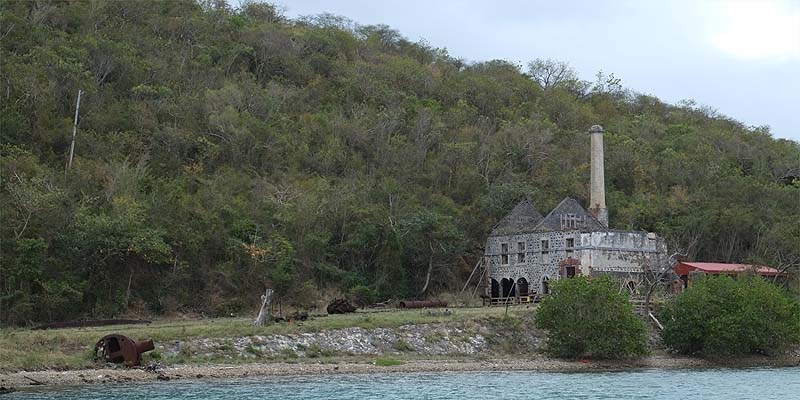
Here are some pictures of the slipway, now called the Creque Marine Railway, on Hassel Island which lies in the bay at Charlotte Amalie, the main city on St Thomas in the US Virgin Islands. It's not a real island at all but was originally a headland which protects Charlotte Amalie harbour from the open sea. It became an island after the Danish government, which then ran what are now the US Virgin Islands, cut a navigation channel through it in the 1860's to improve access to the harbour.
The slipway/railway was built in the 1840's by the St. Thomas Marine Railway Company and was originally called the St. Thomas Marine Railway Slip. It started operations in 1844 and is one of the earliest steam-powered marine railways, and possibly the oldest surviving example of its kind, in the western hemisphere. The stationary beam engine and winch which operated it, built by Boulton of Hamburg in 1840, are still partly in situ. The slipway remained in use until the 1960's. These photos, as you can see, show the view from the boat. It would have been interesting to land and to explore it properly! (If you want to learn more then follow these links http://hasselisland.org/index.php?page=creque-marine-slipway and http://www.stjohnhistoricalsociety.org/Articles/Creque%20Marine%20Railway.htm.)
(I am not sure what the basis of 'Boulton of Hamburg' is. More likely with this name it would be from Boulton and Watt in Birmingham, perhaps the most famous of all builders of this type of engine. The only identification mark shown on these pages http://www.seestjohn.com/hassel_island.html and http://www.seestjohn.com/gallery_hassel_island.html is on a much later steam winch made by Dudgeon of New York. RD)
Thomas Kautzor writes about St. Croix:
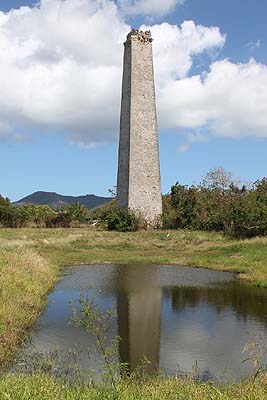
On February 28th 2013 I made a day trip to St. Croix, in the Leeward Islands. St. Croix, together with the islands of St. Thomas and St. John initially formed the Danish West Indies until 1917, when they were sold to the U.S. for the sum of U$25 million and became the United States Virgin Islands (USVI). Like most islands in the Caribbean, sugar cane drove the economy in the 18th and 19th century and numerous small estates were established all over St. Croix. Initially they were powered by animal and windmills, with steam technology introduced in the early 1850s. Today a number of chimneys that dot the landscape bear testimony to this.
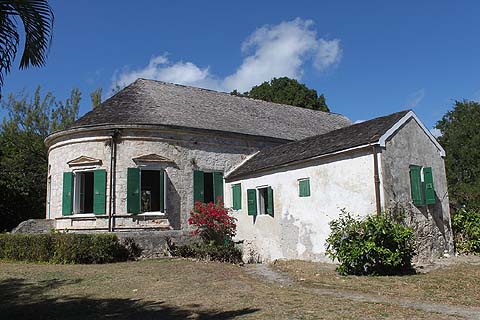
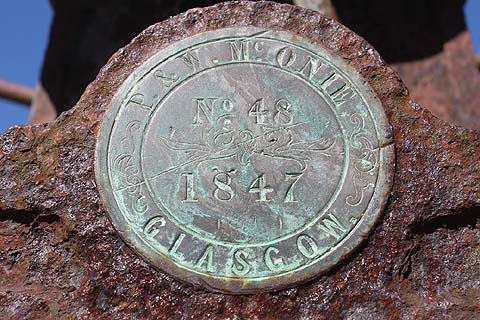
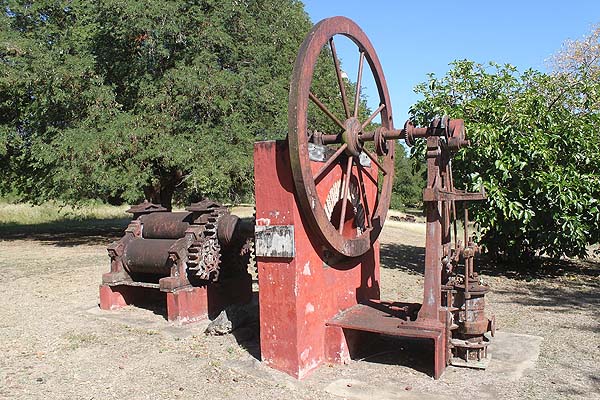
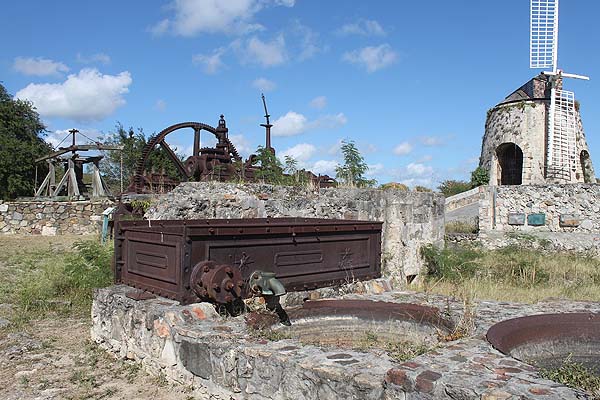
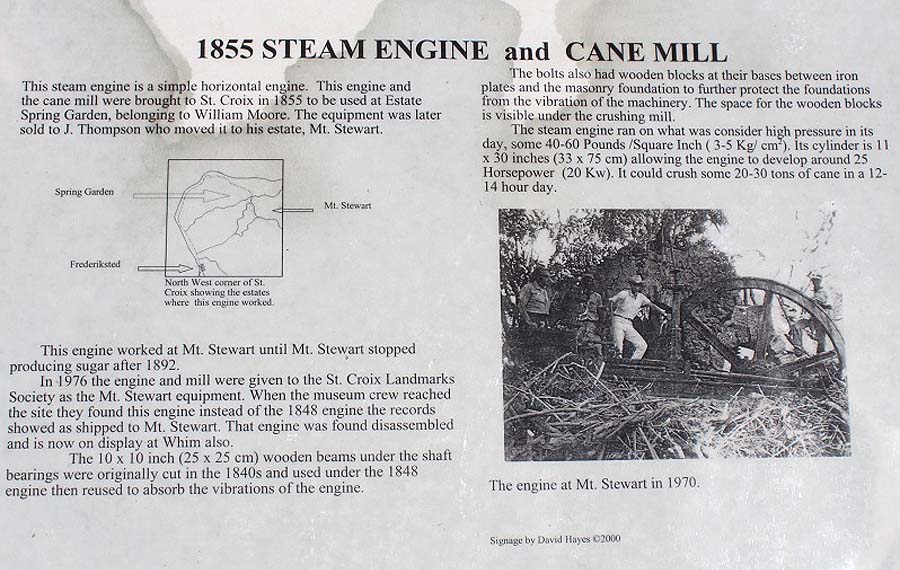
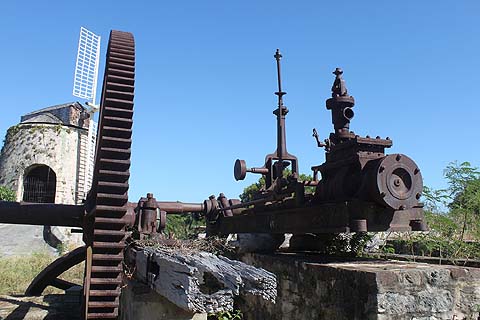
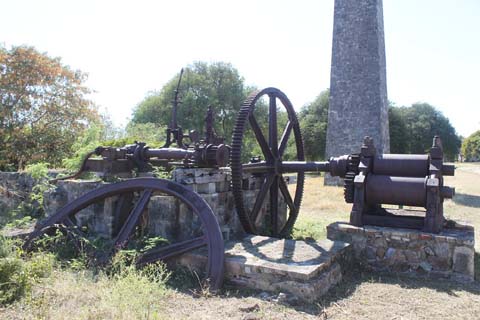
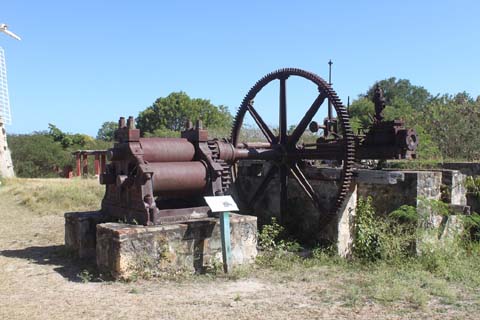
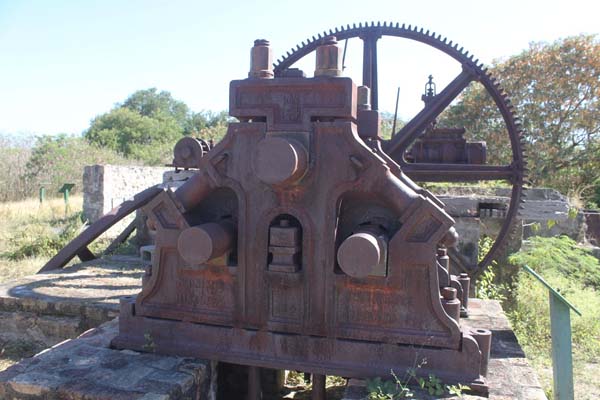
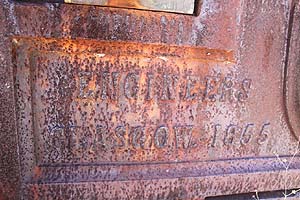
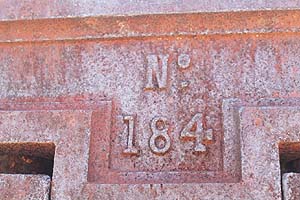
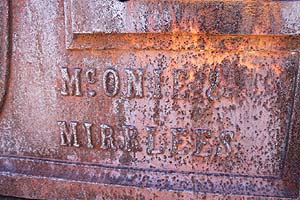
The Estate Whim Plantation Museum on Route 70 (Centerline Road) in Frederiksted is run by the St. Croix Landmark Society (http://www.stcroixlandmarks.com/museums/estate-whim-museum). Aside from an animal and a windmill, two steam mills are on display on the grounds, one powered by a vertical steam engine (P. & W. McOnie, Glasgow No. 48/1847), another by a horizontal one (Engineers McOnie & Mirrlees, Glasgow No. 184/1855 - this is on the mill NOT the engine RD), both obtained from Mt. Stewart Estate in 1976. Hidden in the bush on the edge of the grounds are some other devices, including two steam pumps (Thomas has supplied some pictures but at the size I would have to reproduce them, details would not be clear at all. RD).
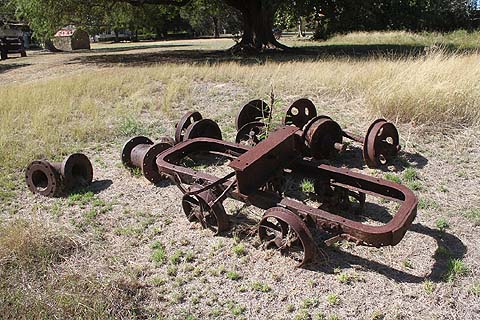
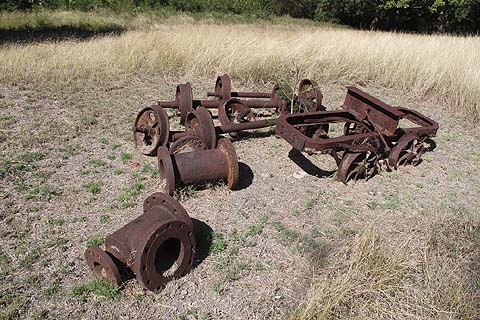
Also on the grounds at Estate Whim Plantation Museum are a few remnants of St. Croix’s two known railways (the other two islands of the USVI are not known to have had any railways). Four metre gauge wheelsets came from the Danish West Indian Sugar Company factory (formerly A/S Den Vestindiske Sukkerfabrik) at Estate Bethlehem in the center of the island, also known as the Central Factory. This was the island's most modern and longest-lived sugar mill, which ultimately absorbed 20 estates. A 12 mile-long railway consisting of a main line and four branches was used to bring cane to the mill, which was reported to be operating by early May 1909 with two H.K. Porter 0-4-2T named “Olga” and “Johan”, later joined by 0-8-0T No. 3 “Blaere” (O&K 6934/1913, 90 hp). This last engine was equipped with Klien-Lindner axles and similar to the locomotives used in Java. In 1937 a 4wDM from Brookville was imported by the U.S. Department of Interior. Bethlehem factory was closed in 1966, when its milling equipment was dismantled and shipped to Venezuela. All that remains at the factory site, located on Route 707 opposite the Virgin Islands National Guard compound, are the chimney and the ruins of the workers' houses.
The 2’6” gauge four-wheel car frame came from Estate La Grange, which is located a short distance to the northeast of Frederiksted (on Route 63/La Grange Rd.), at the island’s west end. La Grange was bought by a Danish sugar company at the end of the 19th century and in 1903 reorganized as the A/S St. Croix Sukkerfabrikker. As part of its modernization, a two-mile narrow gauge railway for hauling cane to the factory was built, linking the factory to Estates Prosperity and Williams (northwest) and to Estate Wheel of Fortune (southeast). Mules were used to haul the trains. The factory at Estate La Grange is still standing, but very overgrown with vegetation. No traces of the narrow gauge railway could be found on site.
In 1904 the Danish West Indian Estate Company sought a concession for a metre gauge trans-island railway linking Christiansted with Frederiksted. Although an engineering survey was carried out, no funds were granted by the Danish Government and it was never built. A photo shows that there was also a pier tramway, probably hand-hauled, at the Central Factory’s sugar warehouse in Christiansted.
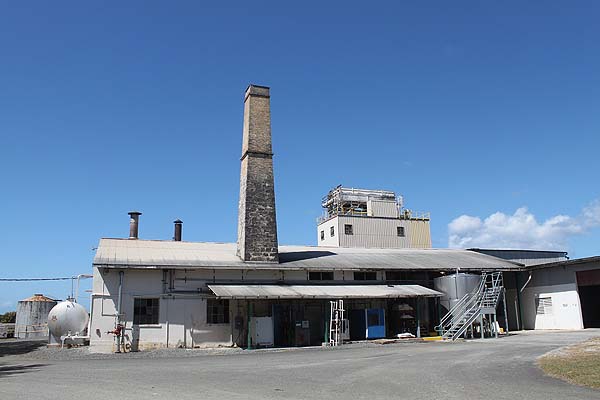
There are two active rum distilleries on the island. The Cruzan Rum distillery (on Route 64 in Frederiksted, northwest of the airport) dates back to the 18th century, with the present facility at Estate Diamond having been put into use in 1934. Estate Diamond stopped producing sugar in the 1960s. Diageo’s Captain Morgan distillery (on Route 66 in Christiansted, northeast of the airport) is a modern facility opened in 2010 (prior to that Captain Morgan rum used to be sourced from a distillery in Puerto Rico). No sugarcane is grown commercially on St. Croix anymore and both distilleries use imported molasses that are processed into rum, which is then exported in bulk to the continental U.S., where it is bottled. Both distilleries offer tours to visitors.
Sources:
-
David Rollinson, “Railways of the Caribbean”, Macmillan, London, 2001 (pp. 72-74) ISBN 0-333-73042-9
-
Sigurd Trolle, “Sukkerbanerne pa St. Croix”, in Morten Flindt Larsen, Per Topp Nielsen and John Poulsen, “Roer pa skinner – Jernbnernes rolle I dansk sukkerproduktion”, bane boger, Smorum, 2008 (4 pages).
-
Suzanne Gordon & Anne Hersh, "Searching for Sugar Mills", An architectural Guide to the Eastern Caribbean. MacMillan Caribbean, 2005, ISBN 0-333-76151-0 (general interest NOT industrial archaeology)
Cruzan Rum Distillery and a typical old mill chimney:
 |
 |
Estate Whim Plantation Museum:
 |
 |
 |
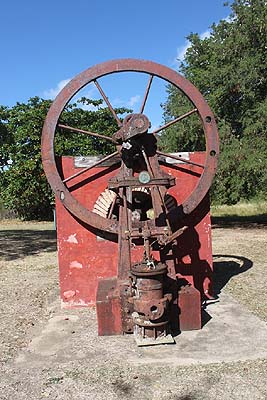 |
This is the complex around the McOnie engine
And its history:
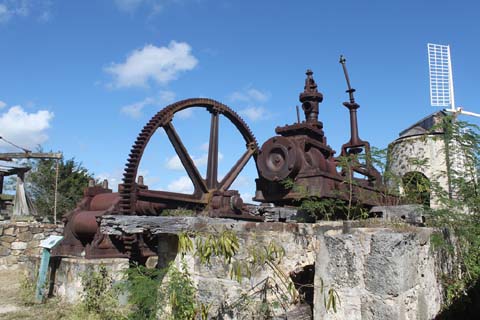 |
 |
 |
 |
The mill:
 |
 |
 |
The narrow gauge remains:
 |
 |