|
This page illustrates examples of articulated steam
locomotives - click here for the introduction to
Garratt locomotives.
Railways in Asia were never heavily into Garratts, those
that worked here were bought to do specific localised tasks, by and large
the inconvenience of having non-standard locomotives meant that their
working life was not long.
Burma
There are two metre gauge lines out of the plains into the hills of
Shan State and by the time the design was established Garratts were the
obvious power, earlier Fairlies and Mallets not really being up to the job.
World War 2 put paid to the earlier locomotives and by the 1970s the lines
were effectively dieselised and the surviving wartime GB and GC Garratts
were reduced to menial duties.
Basil Roberts caught 2-8-0 + 0-8-2 Garratt GB 827 working
an engineer's train at Pyinyaung on the mountainous branch above Thazi on 16th November 1972.

The later GC 2-8-2 + 2-8-2 Garratts were also based at
Thazi. By 2nd February 1977, they had no regular work and Peter Mosse was officially declined permission to photograph 834 on shed, but shortly after it was found conveniently positioned. (PM)

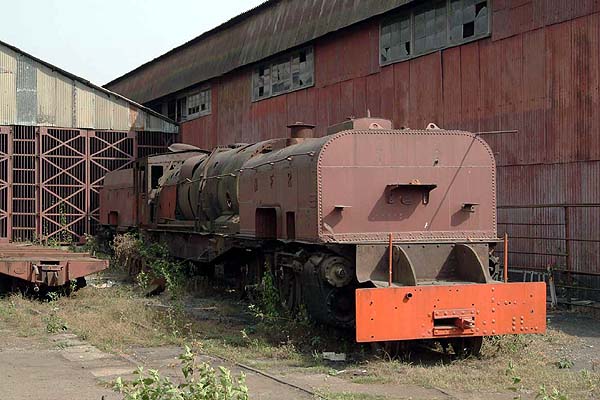
Garratt GC 837 (BP 7134/1944) is
preserved quite complete at Insein works, Yangon, seen here on 1st February
2005.

India
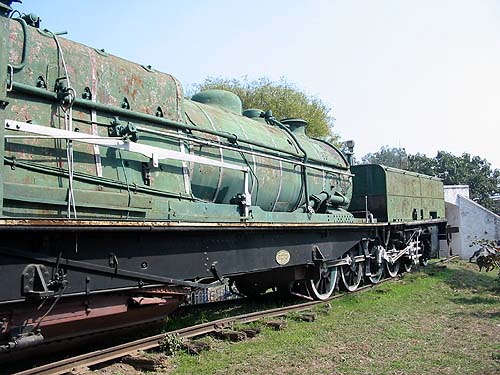
The National Railway Museum in New Delhi has N Class 4-8-0
+ 0-8-4 815, it seems a trifle heavy for the track underneath it,
photographed in 1993 (left) and 2004 (right).
Sister locomotive 811 was plinthed at Kharagpur
for many years. Now it has been returned to working order, Subhasis Ganguly, SE
Railway’s Chief Heritage Officer took this picture of it in 2006, it has since
made several runs.
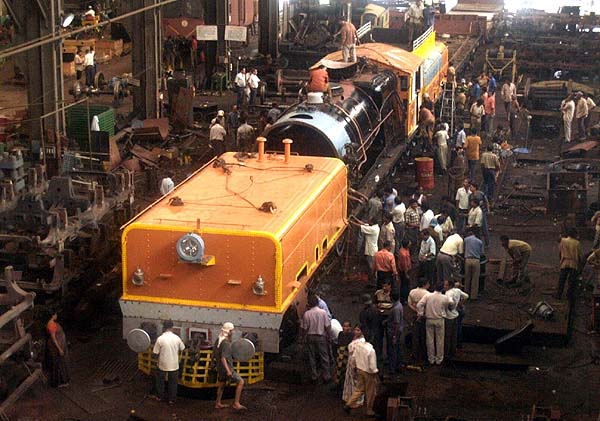
War Department 4-8-2 + 2-8-4 32086 was officially preserved
in Guwahati in Assam where James Waite photographed it in 2004. It is from the same batch of locomotives that became
the East African 55 class. It was later disassembled for a restoration project that
stalled and has since been sent to the museum at Tinsukia and put back
together where Rahul photographed it in 2009.

Nepal
Two Garratts delivered to the 762mm (2' 6") gauge
Nepal Government Railway, on its closure they were transferred to the
Janakpur railway. Here, the terrain was flat and they saw little use. The
railway has been dieselised since 1994. This Richard Pelham's picture of
2-6-2 + 2-6-2 #4, 'Mahabir' on 7th February 1992

This is Basil Roberts' picture of 2-6-2 + 2-6-2 #6, Sitaram on 19th
January 1981

Sri Lanka
By January 1976 2-8-2 + 2-8-2 Garratt 345 at
Nawalapitya was the last 'working' example on the broad gauge,
unfortunately I caught it on a day when it was not rostered to go out on the
line, looking back this was one of my greatest gricing failures.

The late great Basil Roberts was on hand to
record sister locomotive 344 in the hills in January 1973.

Thailand
8 Henschel 2-8-2 + 2-8-2 Garratts were bought
specifically for the Khaen Koi - Pakchong section. They were early victims
of dieselisation but 457 has survived. Basil Roberts photographed it outside
Bang Sue, Bangkok, shed in 1971, but it has long since moved to Kanchanaburi.

|